

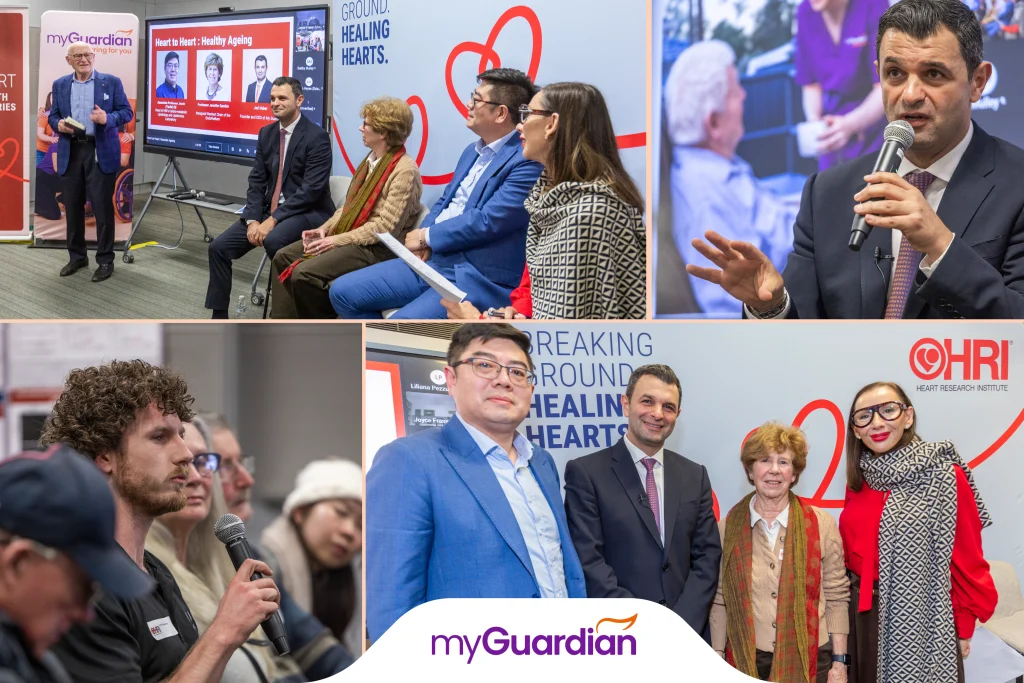
My Guardian CEO Jad Haber Joins Leading Experts to Discuss Healthy Ageing
Date Published: 18 August 2026
What does it really mean to age well?
For Jad Haber, Founder and CEO of My Guardian, there is no single answer.
He thinks of Healthy ageing as a cocktail of interacting issues – cardiovascular health, frailty, mobility and mental health, all needing to be managed in harmony, like instruments in an orchestra.
That was one of Jad’s key takeaways from a recent Heart Research Institute (HRI) Heart to Heart seminar,
Leading researchers explored how our blood vessels change as we age, and what that could mean for the future of healthy ageing.
Science is changing how we think about ageing
Associate Professor Jacob (Yanfei) Qi shared research into how cholesterol moves into the walls of our blood vessels as they age.
His work points towards a future of more personalised approaches to healthy ageing, by recognising that what works for one person may not work in exactly the same way for another.
Professor Jennifer Gamble explored an equally fascinating connection between blood vessels and the ageing brain.
Her research suggests that changes to the brain’s blood vessels may occur very early in the development of Alzheimer’s disease, potentially opening new opportunities for earlier intervention.
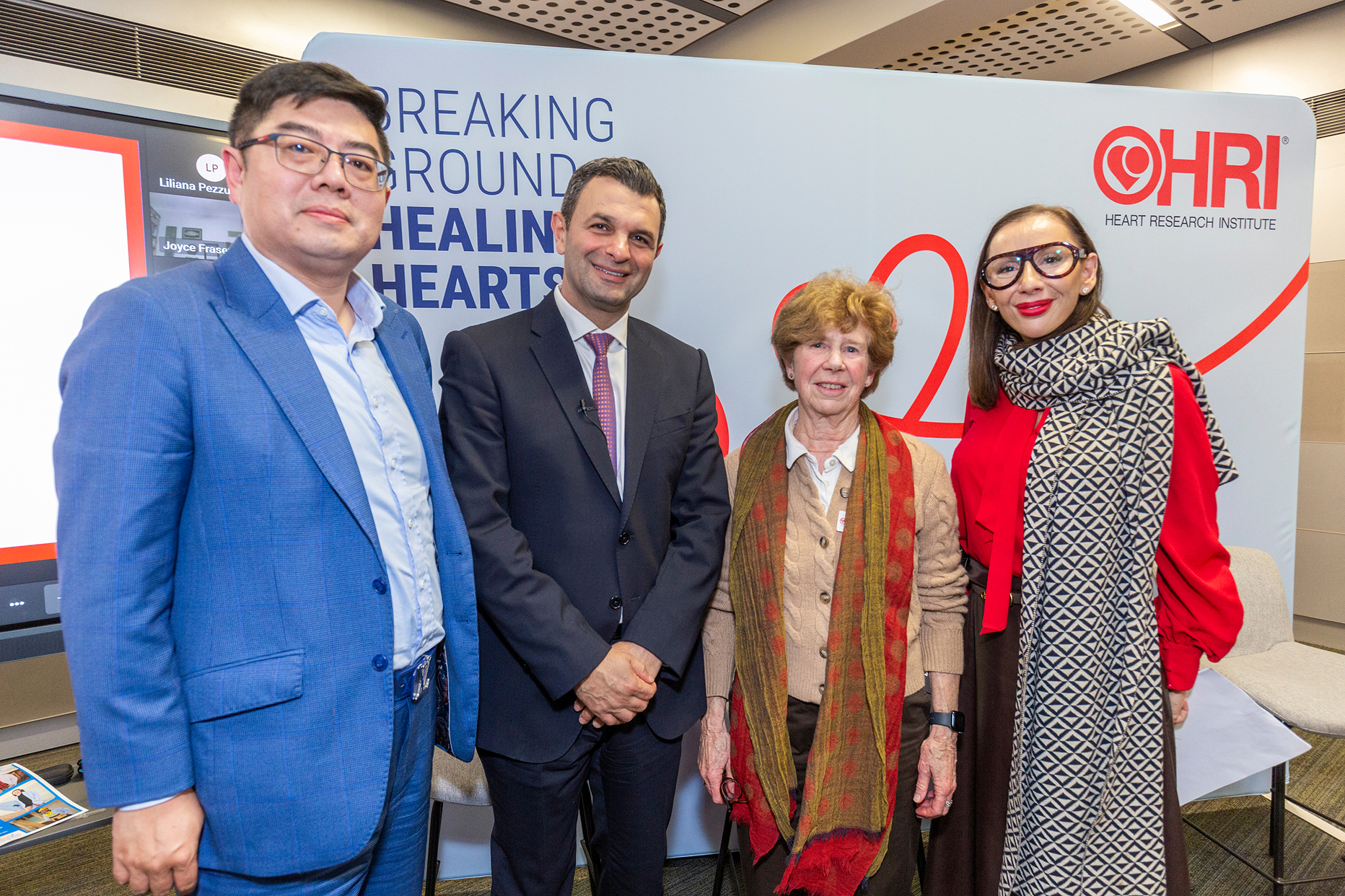
(L-R) Speakers Associate Professor Jabob Qi, Founder and CEO, Jad Haber, Professor Jennifer Gamble, with Heart to Heart Moderator Katrina Dowling, and , HRI Director Development, Philanthropy and Communications.
For Jad, this kind of research matters because it could change not only how we treat disease, but how we approach ageing itself.
“The question is: how do we take what science is discovering and make it useful in people’s everyday lives?”
This is where Jad sees an important partnership between science and aged care. Researchers are “paving the way” by discovering more about the ageing process. Care providers are on the ground, seeing what ageing actually looks like in people’s lives.
They see changes in mobility. Increasing frailty. Social isolation. Changes in confidence and independence.
That puts care providers in a unique position to recognise changes early and feed real-world observations back into the broader conversation about ageing.
“We shouldn’t just be care providers,” says Jad. “We should be prevention providers.”
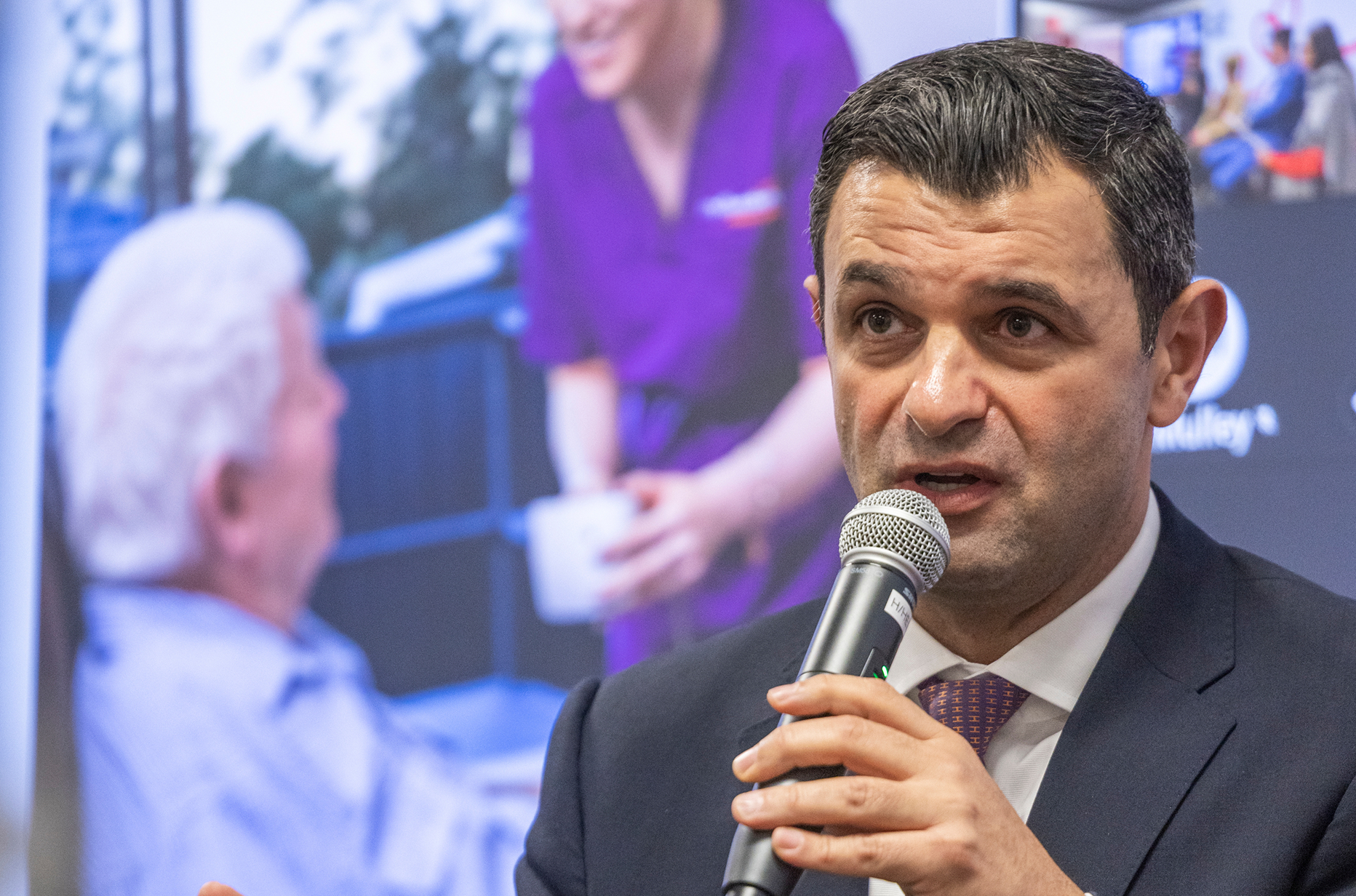
Founder and CEO of My Guardian, Jad Haber
Controlling the controllables
Of course, we can’t control everything about ageing. But we can control some things.
For Jad, that means identifying the risks we can influence and acting early, while decline may still be reversible.
It might mean supporting mobility, maintaining social connection, encouraging healthier choices or recognising changes in physical and mental wellbeing before they become bigger problems.
And social connection is particularly important. It’s about happiness, connection, independence and quality of life.
Bringing science into care
The future of ageing is likely to bring earlier detection, more personalised approaches and new ways of preventing or managing disease.
But scientific breakthroughs only become meaningful when they can improve people’s everyday lives.
That’s why My Guardian believes in working with organisations at the forefront of research and innovation, including the Heart Research Institute.
Science can show us what’s possible. Care providers can help turn that knowledge into practical action.
For My Guardian, staying at the leading edge of aged care means staying curious, learning from science and looking for practical ways to apply that knowledge to the people we support today.
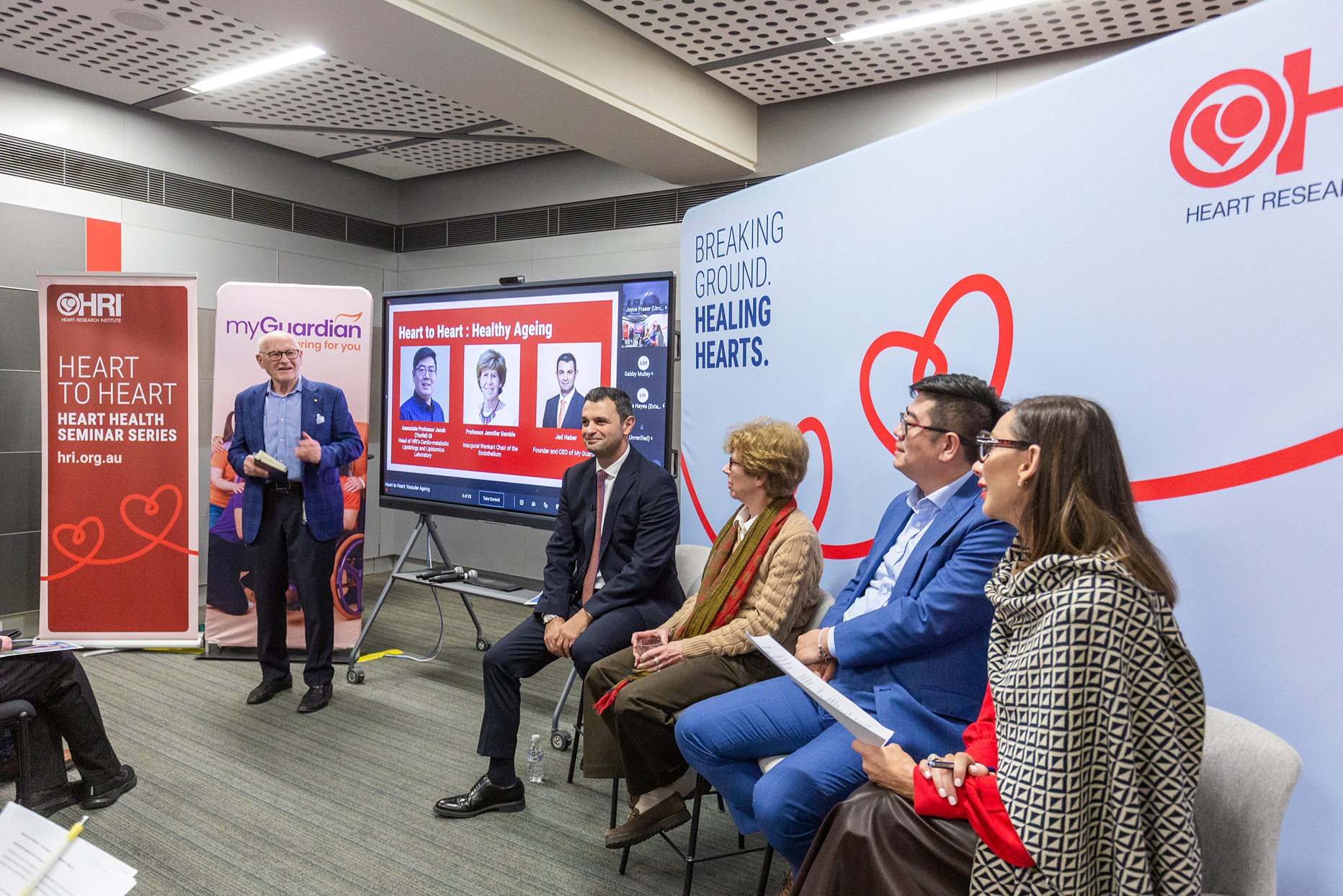
Speakers during the event
Because ageing isn’t one issue. It’s a cocktail.
And the better we understand how all the ingredients work together, the better chance we have of helping people live well, at home, longer.