

What Is NDIS Supported Independent Living (SIL)?
- 7 min read
A Quick Snapshot
- SIL means Supported Independent Living.
- It provides NDIS-funded support to help you live as independently as possible.
- It is generally for people with higher support needs who need regular help or supervision.
- Support can include personal care, cooking, cleaning, daily routines and building independence skills.
- SIL does not pay your rent, groceries, utilities or other everyday living costs.
- SIL is different from SDA and ILO (they provide different types of home and living support).
- Since 1 July 2026, SIL providers are subject to mandatory NDIS registration requirements.
SIL can help you live independently
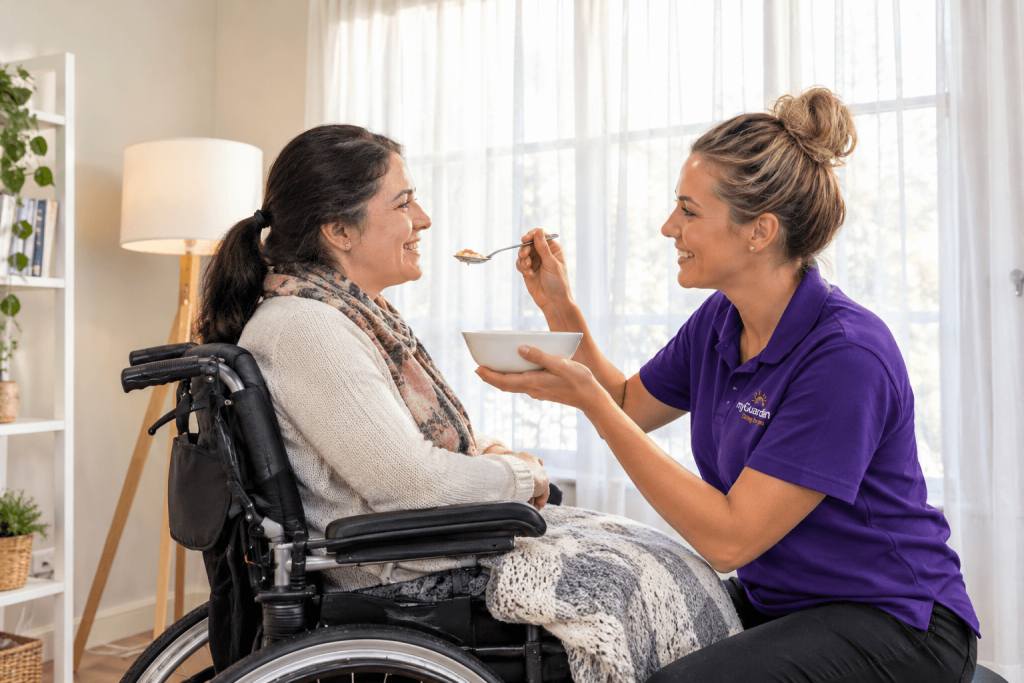
SIL is designed for NDIS participants who have higher support needs and require regular assistance or supervision with daily living.
The aim is not simply to provide care. SIL should help you develop and maintain the skills and independence you need to live your life as you choose.
Your support may include:
- Personal care such as showering, dressing and grooming
- Cooking and preparing meals
- Cleaning and laundry
- Shopping and managing household routines
- Taking medication, where this is part of your funded support
- Developing skills for greater independence
- Managing daily routines
- Support to stay safe at home
- Overnight support where it is included in your approved supports
The type and amount of support you receive should reflect your individual disability-related needs.
SIL funding and claiming changed in 2026
SIL claiming arrangements changed from 1 July 2026. A new SIL support item was introduced for supports delivered from that date.
Your provider should explain how your SIL supports will be delivered and claimed before services begin.
SIL funding does not pay for ordinary living costs
SIL funding is for your disability-related support needs. It doesn’t normally pay for the ordinary costs of running a household.
You’e generally responsible for costs such as:
- Rent or other housing costs
- Groceries and personal food
- Electricity, gas and water
- Internet and telephone costs
- Furniture and household items
- Personal entertainment and other everyday expenses
The NDIS separately considers other home and living supports, including Specialist Disability Accommodation (SDA), Individualised Living Options (ILO), Medium Term Accommodation (MTA) and home modifications.
SIL is different from SDA and ILO
SIL, Specialist Disability Accommodation and Individualised Living Options are different.
Supported Independent Living (SIL)
SIL funds the support workers who help you live as independently as possible. It does not fund your rent or the physical home itself.
Specialist Disability Accommodation (SDA)
Specialist Disability Accommodation
SDA is specially designed housing for people who have very high support needs or extreme functional impairment. SDA funding is for the specialist housing, rather than the everyday support you receive.
You may have both SDA and SIL funding if you meet the relevant requirements.
Individualised Living Options (ILO)
ILO is a flexible approach that can include living arrangements that are different from traditional supported accommodation.
The right option depends on your disability, support needs, goals and preferred living arrangement.
The NDIS looks at your individual support needs
The NDIS considers whether SIL is reasonable and necessary and whether it is the most appropriate way to meet your disability-related support needs.
SIL funding is not automatically approved because you have an NDIS plan or because you need help at home.
Information may be required about:
- What you can and cannot do independently
- The support you currently receive
- How often you need assistance or supervision
- Your goals and preferred living arrangements
- Your current living situation
- The risks or difficulties you face at home
- The support you need to develop greater independence
- Other home and living options that may meet your needs
A Home and Living Supporting Evidence form may be used as part of the process.
An allied health assessment, such as an occupational therapy assessment, may also provide useful evidence. However, there is not a simple rule that every SIL application must include an occupational therapist’s report.
SIL providers now have mandatory registration requirements
From 1 July 2026, SIL providers became subject to mandatory NDIS registration requirements. Existing unregistered SIL providers could continue under transitional arrangements if they applied for registration by 1 October 2026.
Registered SIL providers must meet the relevant NDIS Practice Standards
Including requirements covering:
- Supported decision-making
- Safeguarding participants
- Practice governance
- Housing, tenancy and support arrangements
- Quality and safety requirements
If you are choosing a SIL provider, ask whether they are registered with the NDIS Commission
Or, where relevant to the transition arrangements, whether they applied for registration by the required date.
You should have choice and control over your living arrangements

Good SIL practice includes working with you to understand:
- Where you want to live
- Who you want to live with
- How you want to be supported
- What daily activities matter to you
- What skills you want to develop
- How you want to spend your time
Your housing arrangement and your support arrangement may involve different providers. For example, you may receive SDA from one provider and SIL from another.
The right SIL provider matters
Choosing a provider is about more than the number of support hours. Look for a provider that:
- Understands your individual support needs
- Listens to your preferences
- Supports your independence rather than doing everything for you
- Communicates clearly with you and your family or nominee
- Has appropriate systems for complaints and incidents
- Can explain how your support will be delivered
- Works respectfully with your other providers
- Gives you a clear service agreement
You should feel comfortable asking questions before agreeing to SIL.
Frequently asked questions
Is SIL a house?
No. SIL is funding for support, not funding to buy or rent a house.
Does SIL pay my rent?
No. You normally pay your own rent and everyday household costs.
Do I need SDA as well as SIL?
Not necessarily. SDA and SIL are different types of NDIS support. Some people may need both, while others may only need one.
Can I live with other people in SIL?
Yes. SIL is commonly provided in shared homes, but your living arrangement should suit your needs and preferences.
Can I choose my SIL provider?
Yes. You have choice over your NDIS provider, subject to the way your funding is managed and the provider’s ability to deliver the support you need.
How do I apply for SIL?
Start by discussing your home and living needs with your support
coordinator, planner or the NDIS. You will need evidence showing why SIL is appropriate for you and what support you need to live as independently as possible.
Table of Contents
Explore related topics

You’ve been assessed. You’ve received your letter confirming your Support at Home funding.


Aged Care fees can feel complicated, especially when you’re trying to understand.



Get Support!
Whether you’re ready to start experiencing quality care or just want to learn more about our services, our friendly support team is here to help. Send us a message by filling in the form, or call us anytime on.