

What is NDIS? A Simple Guide to Disability Support
- 8 min read

A Quick Snapshot
The NDIS (National Disability Insurance Scheme) provides funding and support for eligible Australians with permanent and significant disability.
- NDIS eligibility generally depends on your age, residency and the nature and impact of your disability.
- To get NDIS funding, you first need to make an NDIS access request and provide evidence of your disability and how it affects your everyday life.
- If you’re eligible, your NDIS plan can provide funding for reasonable and necessary supports related to your disability.
- The NDIS is not an income support payment and does not pay ordinary living costs such as rent, groceries or household bills.
- You have choice and control over many of the supports and providers you use.
If you’re trying to understand the NDIS for yourself or someone in your family, the process can seem complicated. Here’s a straightforward explanation of how it works. (Or you can just call My Guardian and we can talk you through it).
What is the NDIS?
The National Disability Insurance Scheme (NDIS) is an Australian Government scheme that provides funding for eligible people with permanent and significant disability.

The NDIS is designed to help such people:
- live as independently as possible
- develop skills and achieve their goals
- participate in their community
- access appropriate care and support
- have greater choice and control over their lives.
The NDIS is different from the Disability Support Pension. The NDIS provides funding for disability-related supports; it isn’t a regular income payment.
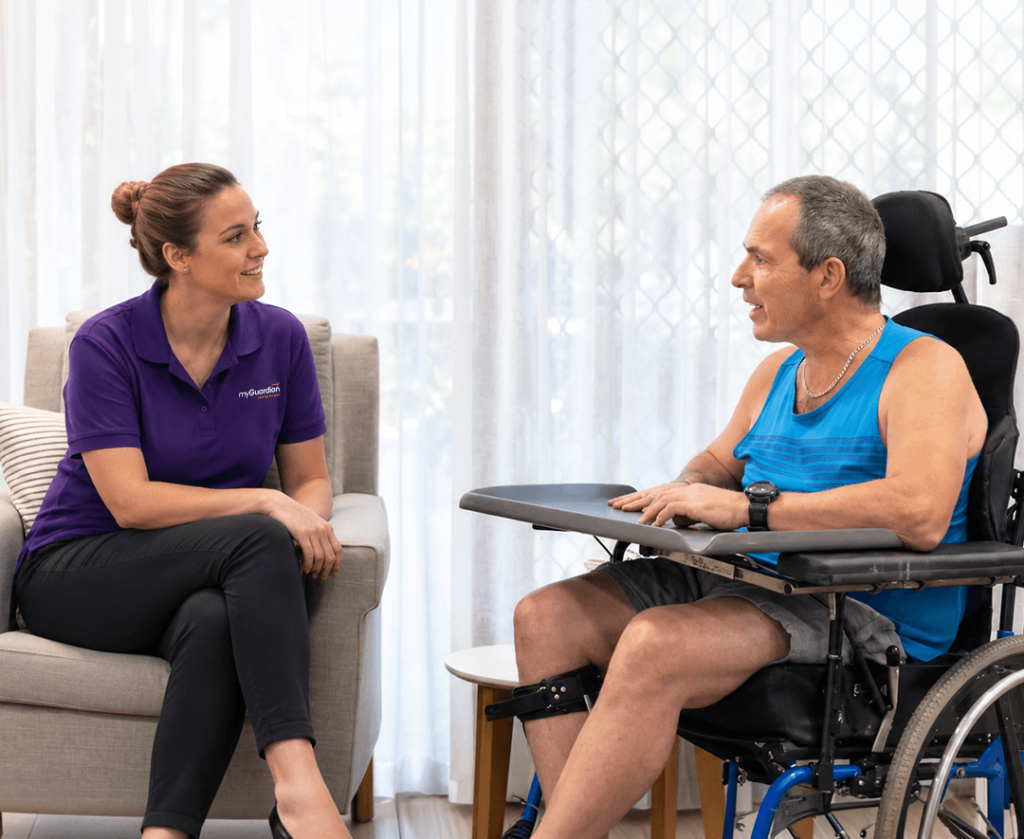
Who can access the NDIS?
NDIS eligibility
To be eligible for the NDIS, you generally need to:
- be between 9 and 65 years of age when you apply
- be an Australian citizen, permanent resident or Protected Special Category Visa holder
- have a permanent and significant disability that substantially affects your ability to take part in everyday activities.
Children under 9 may be able to receive support through the NDIS early childhood approach.
Eligibility isn’t based simply on having a particular diagnosis. The NDIS considers how your disability affects your everyday life and the support you need as a result.
What does permanent and significant mean?
Permanent generally means your disability is likely to be lifelong.
Significant means it has a substantial impact on your ability to manage everyday activities independently.
This can affect areas such as:
- communication
- mobility
- learning
- social interaction
- self-care
- self-management.
A person with a physical, intellectual, sensory or psychosocial disability may be eligible, depending on how their disability affects their functional capacity.
What does the NDIS fund?
Your NDIS plan may include funding for supports that are reasonable and necessary because of your disability.
Depending on your individual needs and goals, this may include:

Help with everyday activities
For example, assistance with personal care, household tasks or getting out and about.
Support to participate in the community
This can include support to take part in social, recreational, educational or community activities.

Assistive technology
Funding may be available for appropriate equipment or technology that helps you communicate, move around or manage everyday activities.
Home modifications
In some circumstances, the NDIS can contribute to changes to your home that help you live more safely and independently.

Therapy and other supports
Depending on your needs, your plan may include appropriate therapeutic or capacity-building supports.
Support coordination
Some participants receive funding for support coordination to help them understand and use their NDIS plan, find suitable providers and coordinate their supports.
Supported accommodation
For people with higher support needs, NDIS funding may contribute to options such as Supported Independent Living (SIL) or Specialist Disability Accommodation (SDA) where eligibility requirements are met.
The supports funded by the NDIS are different for each person. Having a particular diagnosis does not automatically mean a particular support will be funded.
What the NDIS DOESN’T fund
The NDIS generally doesn’t pay for everyday expenses that everyone has, such as:
- rent
- groceries
- electricity and other household bills
- ordinary clothing
- general medical treatment covered by the health system.
It also doesn’t normally fund something that should be provided by another government or community service.
The important principle is that NDIS funding is for disability-related supports, rather than general living expenses.
How to get NDIS funding
Step 1. Make an access request
If you think you may be eligible, you can make an NDIS access request.
You can contact the NDIS directly or get help from an appropriate person such as a health professional, Local Area Coordinator or other disability support organisation.
Step 2. Provide evidence
You’ll need information that helps the NDIS understand:
- your disability
- whether it is permanent
- how it affects your everyday life
- what support you need.
Medical reports, assessments and other evidence from relevant professionals may be required.
Step 3. Wait for the eligibility decision
The NDIS will assess your application and let you know whether you meet the access requirements.
If you’re accepted, you’ll move on to planning.
Step 4. Develop your NDIS plan
Your plan is based on your individual circumstances, goals and disability-related support needs.
You can also choose how your NDIS funding is managed. Depending on your circumstances, it may be:
- self-managed
- plan-managed
- NDIA-managed.
Once your plan is in place, you can start arranging the supports you need.
Choosing your NDIS provider
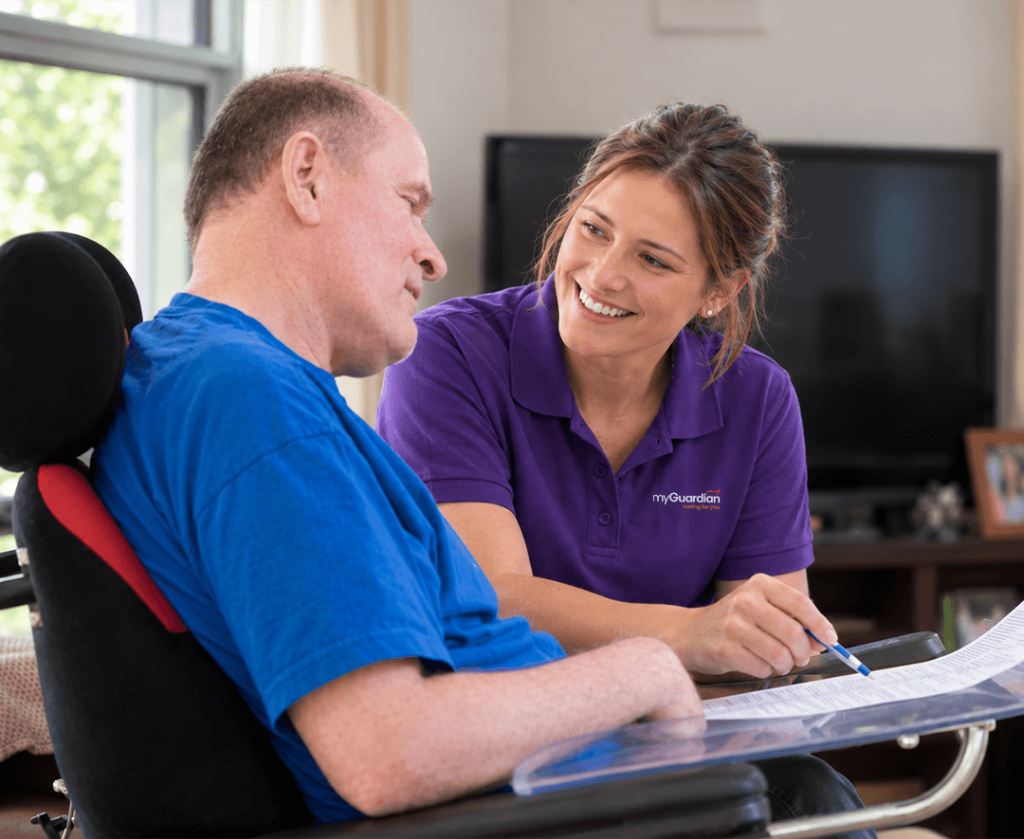
Your NDIS plan gives you funding. You then need to find the right providers and services to put that funding to use.
Depending on your plan, you may choose providers for:
- personal care
- disability support
- community participation
- support coordination
- plan management
- therapeutic supports
- SIL or SDA.
You have the right to make choices about the providers you use and should expect to be treated with dignity and respect.
If a provider isn’t right for you, you may be able to change providers.
NDIS support should help you live more independently
The NDIS isn’t simply about paying for care.
The broader aim is to give eligible people with disability the support they need to live as independently as possible, make their own choices and participate in everyday life.
Understanding your eligibility, your plan and how your funding can be used is an important first step.
If you’re unsure where to start, My Guardian can help you understand the NDIS, navigate the application process and connect you with appropriate disability supports.
Frequently asked questions
What is the NDIS?
The NDIS is a government-funded scheme that provides disability-related funding and support to eligible Australians with permanent and significant disability.
Am I eligible?
Generally, people aged 9 to 65 who meet the NDIS requirements for disability, residency and functional impact may be eligible.
How do I get NDIS funding?
You need to make an NDIS access request and provide evidence of your disability and how it affects your everyday life. If you meet the eligibility requirements, you can then receive an individual NDIS plan.
Does the NDIS pay for everyday living costs?
No. NDIS funding is generally for disability-related supports, not ordinary expenses such as rent, groceries or household bills.
Can I choose my NDIS provider?
In many circumstances, yes. Your choice of provider depends on how your NDIS funding is managed and the type of support you need.
Can My Guardian help me with the NDIS?
Yes. My Guardian can help you understand your options, get through the NDIS process and provide a range of disability supports, depending on your individual needs and plan.
Table of Contents
Explore related topics

You’ve been assessed. You’ve received your letter confirming your Support at Home funding.


Aged Care fees can feel complicated, especially when you’re trying to understand.



Get Support!
Whether you’re ready to start experiencing quality care or just want to learn more about our services, our friendly support team is here to help. Send us a message by filling in the form, or call us anytime on.