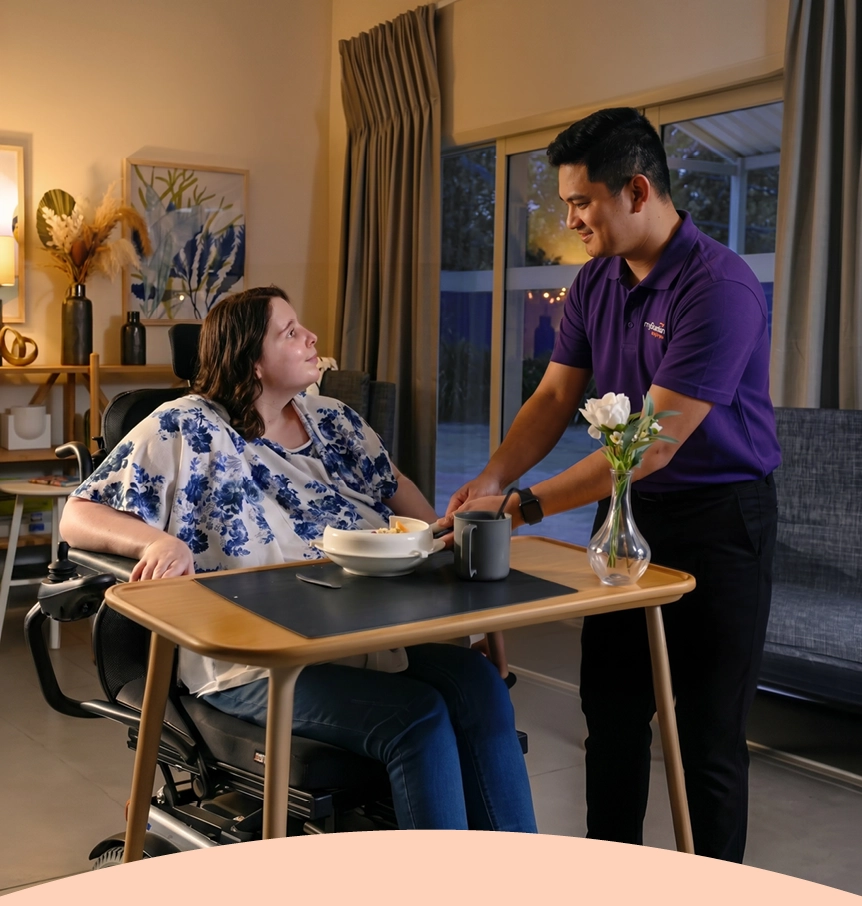
Every person’s care journey is different. While some individuals only require occasional support, others may reach a point where continuous care provides greater safety, comfort and peace of mind. Recognising these changes early can help families make informed decisions and ensure the right level of support is available when it is needed most.
Common signs that expert 24 Hour Care may be needed
Frequent falls or mobility concerns
Memory loss or confusion affecting daily life
Difficulty managing personal hygiene
Missed medications or medication errors
Increased risk of wandering or becoming disoriented
Difficulty preparing meals or maintaining nutrition
Ongoing health conditions requiring regular support
Living alone with increasing care needs
Who can benefit from 24 Hour Care?
The NDIS follows a structured process that helps individuals access funding and disability support services tailored to their needs. While each participant’s journey may vary slightly, the process generally includes several key steps from eligibility through to receiving ongoing support. Understanding these steps can help participants and families feel more confident navigating the scheme.
Older adults
Support for older adults who need assistance with daily activities, mobility, safety and ongoing wellbeing.
People living with Dementia
Structured support that helps reduce confusion, wandering and safety risks while maintaining familiar routines.
Individuals recovering from Illness or surgery
Short-term support during recovery following hospital discharge, surgery, illness or serious injury.
People with complex care needs
Ongoing support for chronic health conditions, reduced mobility and complex daily care requirements.
Situations where families often consider 24 Hour Care
Determining the right level of support can feel overwhelming, particularly when care needs are changing. A professional care assessment can help identify current challenges, evaluate risks and recommend the most suitable care options based on individual circumstances. Get personalised guidance and learn whether 24 Hour Care is the right option for your loved one.
Whether you’re ready to start experiencing quality care or just want to learn more about our services, our friendly support team is here to help. Send us a message by filling in the form, or call us anytime on.